


Why you forget your opening lines by next Tuesday (and how to stop)?
Spending hours memorizing chess openings only to forget them mid-game? Learn how the Ebbinghaus Forgetting Curve and Spaced Repetition fix it.
On Sunday, you decided to get serious about your chess. You spent three hours studying the Caro-Kann Defense Advance Variation. You played through move 12, checked every sideline, and felt like a master.
Thursday night comes. An opponent plays 3. e5 against you on Lichess.org. You freeze. “Wait… do I play 3…c5 first, or does the bishop come out to Bf5?” You guess wrong, drop a piece six moves later, and hate yourself. Where did all those hours of study go? They vanished into the Ebbinghaus Forgetting Curve.
Your brain is built to prune
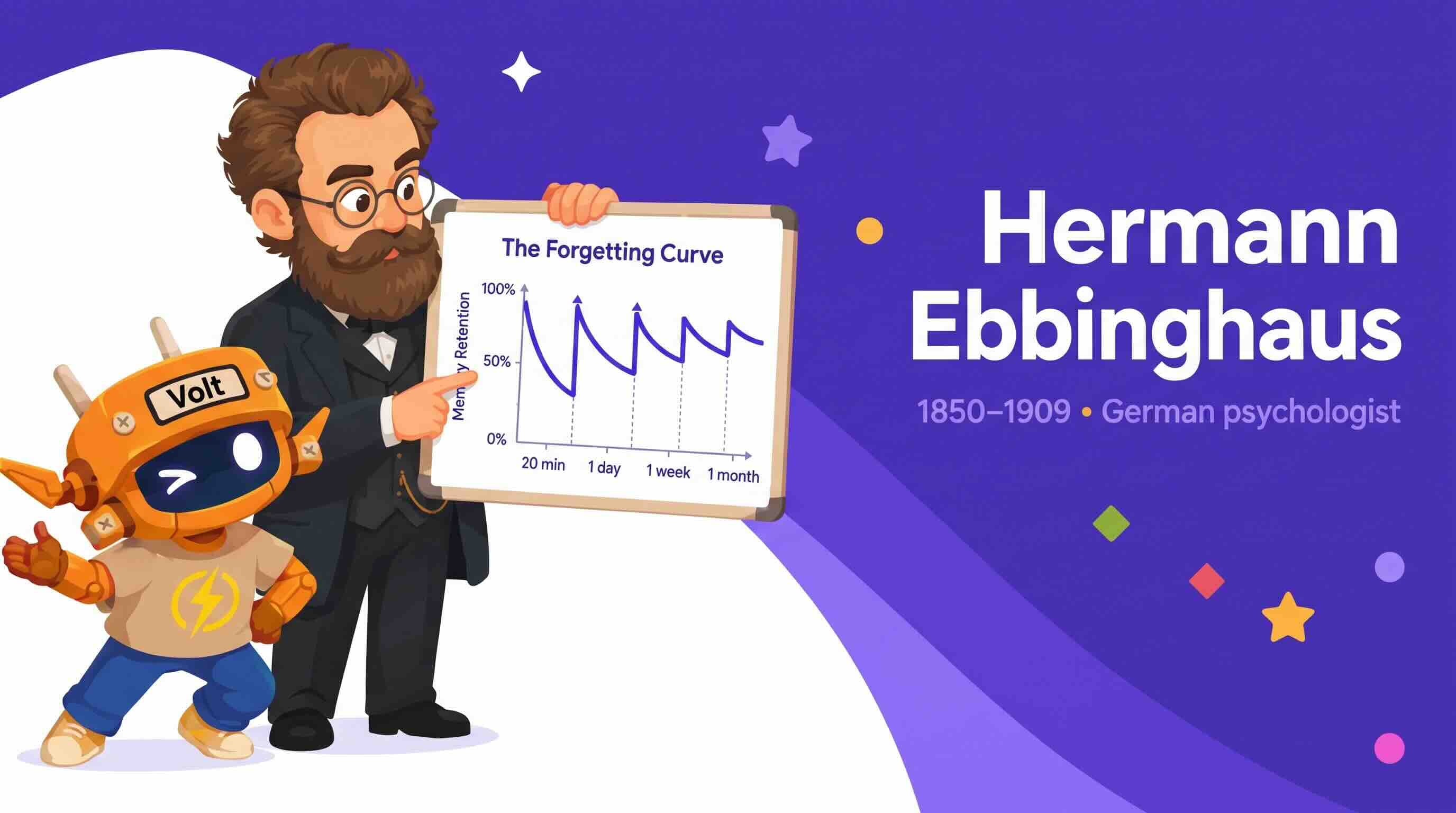
In 1885, psychologist Hermann Ebbinghaus discovered that without active recall, our memory dumps new data fast:
Within 20 minutes, you forget 40% of what you learned.
Within 24 hours, you lose nearly 70%.
By day 6, you retain barely 20%.
When you cram 15 opening lines in an afternoon, you put them in working memory. If you don't retrieve those moves right as memory fades, your brain marks them as clutter and clears them out.
The fix: Spaced Repetition Systems (SRS)
Ebbinghaus also found the solution: every time you actively pull a memory back right before forgetting it, the decay curve flattens.
Instead of studying for 3 hours once a week:
Review the line on Day 1.
Test yourself on Day 3.
Revisit it on Day 7, then Day 21.
The missing piece in chess training
Most SRS tools are built for grandmaster materials, not your practices (openings studies, puzzles) and real games. That's why we built ChessVolt's Volt Tracker. ChessVolt plugs into your practices and actual games, flags where your memory broke down, and drops those exact positions into an automated Ebbinghaus review queue. You don't make flashcards. When you log in, your morning queue serves up the exact moves you struggled with three days ago.
Stop cramming openings on weekends. Work with the curve, not against it.
References: